

Module 4: Supporting families and families
4.5 Anticipating grief – or not?
The period around decision-making, and the cessation of life-sustaining treatment, can be an anxious time for family members as they anticipate how they might feel after the death. Some may be terrified of being swamped by grief. Others may feel they have done most of their grieving already. Some may be hoping that, at last, they will be able to feel bereaved instead of feeling ‘in limbo’, or numb, or as if the person died long, long ago.
You may have heard the term ‘ambiguous loss’ to refer to the grief people may experience about someone who is still alive; or you may have come across the idea of ‘complex grief’. These don’t necessarily neatly map onto what families of PDoC patients are experiencing but can be a starting point for thinking about some of this.
Click on the ‘plus sign’ symbols for Gunars and Miggy below to read their thoughts.
Show Gunars' comment
 “I didn’t really feel it necessary to be at the end, because fundamentally I lost my sister, four and a half years ago, on the day she had that stroke…she was gone. So, while I went through this process [of having to fight to have treatment stopped] – it was also a grieving thing and [it] becomes reality when you’ve achieved the end result of ending her life, in the most compassionate and dignified way that was possible. We managed to do that. And there is a peace and calm inside now. There is relief.”
Show Miggy's comment
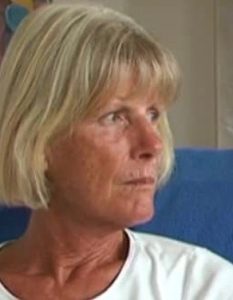 “My son is long gone. We just have his body to deal with now.
I hope there will be a feeling of ‘the end’ of it… I hope we feel we have had a bereavement.”
Whatever they expect, feelings after the death can be unpredictable. Some people find they are overwhelmed with grief for the person who was, and also for the person they had tended for years after their injury. Some people feel anger and rage about what everyone has been put through. Others felt only relief.
Show text version
Show text version
“I have no regrets. I felt like we’ve done everything we could do for her for all these years and I felt like now she was at peace and to be honest with you, I don’t really feel like I’ve had particularly any grief because I’ve been grieving all these years. I’ve been in a twilight world with her… I suppose maybe there’s a slight feeling of guilt that I haven’t felt grief, but the overwhelming calmness, some feeling of completion, and that we’ve done the right thing for her, takes over from that.”
The ‘Angel of Grief’ image below is a still from “Where Are You Now?” a shadow puppet performance created by Karin Andrews Jashapara. This play was inspired by research conducted by the Coma and Disorders of Consciousness Research Centre
Grieving for a lost loved one can start long before a PDoC patient dies. A family may have been told that the person, although still breathing, is never coming back in a recognisable form. They may have spent months or years at the bedside of their relative without any meaningful interaction.
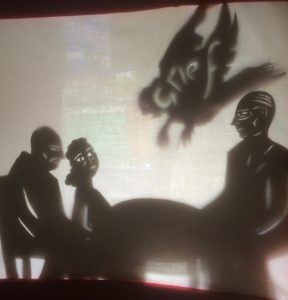
‘The Angel of Grief’
Questions for you
- We interviewed partners, in-laws and parents, siblings and adult children. However, people at the bedside might include friends, or neighbours or work colleagues– might some of the questions these people ask be different?
- The information presented in this module did not include interviews with children directly. What particular issues might children face and how can they be supported?
Post a comment below
Think about the questions above – do you have ideas or experiences to share to inform discussion of these questions? Or is there a reflection you’d like to share about family experience from what you’ve learned so far in this module?
13 Comments
Leave a reply
You must be logged in to post a comment.

Personally, I have not had any such experience however in my country there are communities in which the people take this kind of decisions , (mostly when very old and desiring to renounce the world), to slowly decrease their intake of food and then later of water and to peacefully find their unison with the almighty. The family , friends , neighbors and relatives calmly visit them for their’ darshan’. This is however not so common now. This is not considered as suicide or a passion. The reason I am mentioning here is that though voluntary , the process is similar to CANH withdrawal and peaceful.
It is so interetsing to hear from diverse cultural perspectives and experience – thank you.
i know of a close relative who took the option of CANH and i do remember interacting with her children after she passed away. they said that it was sad to see her suffer and even though they miss her and remember her dearly they are happy that she is peaceful now. So I think even children understand the concept of suffering and if they are counselled well they see it in the right perspective.
I haven’t experienced CANH of a parent of young children so I don’t know how this would be supported. I think we often allow the remaining family to lead on what is best for the child but they may well require support as to how to deliver information and what other organizations may be beneficial, for bereavement. However, such organizations are unlikely to be aware of PDOC.
I meant discontinuation of CANH
complex prolonged grief, some parallels here with families that are caring for children with complex, severe and lifelong disability.
I agree with Kathy. I had worked with families who looked after their children with complex needs for years. Some of the discussions we had as nurse and parent, were mirrored in my own family when considering my sister -but I was a sister not a nurse.
Safe in death. Vulnerable in life.
powerful and thought provoking words.
There’s almost of poem in those words you’ve picked out – yes, so challenging in their simplicity
Yes, this really was hard hitting
I experienced personally the similar stage .
Really interesting to consider the different views and feelings of families at the deathbed. Also shows how important it is for us to support families with their decisions and not push our own views on them e.g.- encouraging them to visit at the end if this is not what they want.
families grief differently, what matters most is the best way to support them.